
Making your own natural foaming hand soap costs a fraction of store-bought products, takes just seconds, is healthy for your skin, and you can customize the scent to your liking. All of that should be enough to get you excited, but making your own dispenser also reduces unnecessary waste! In this post, I’ll show you how to make a simple foaming soap dispenser and share my favorite recipe for a luxurious and eco-friendly foaming soap.
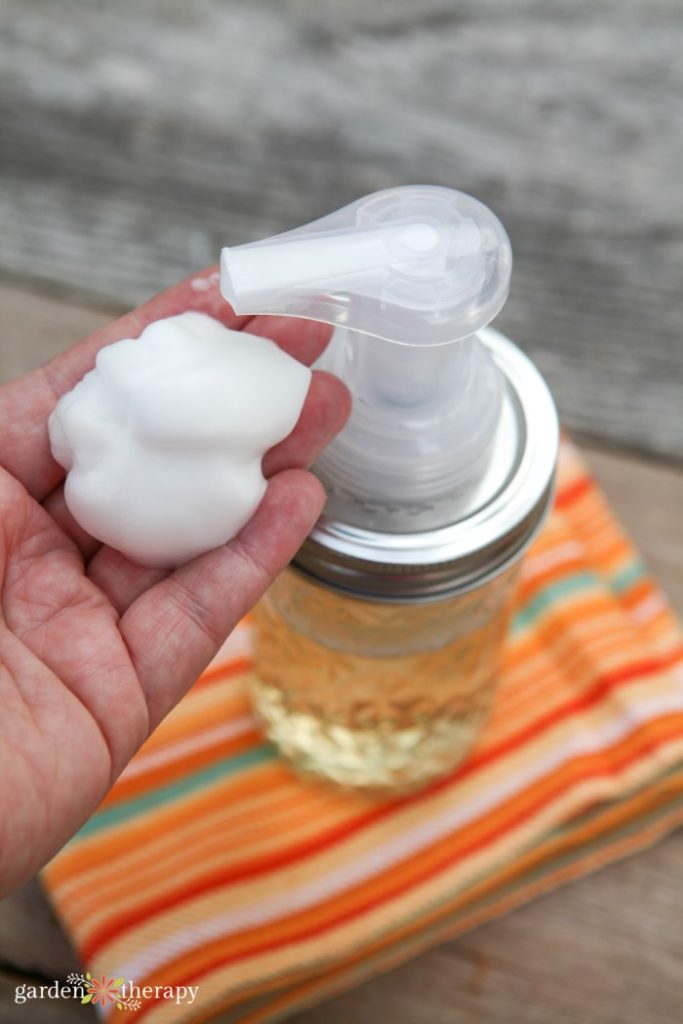
If you follow Garden Therapy, you know that I forgo store-bought beauty products and make all of my own natural skincare products.
Somehow, over time, I became addicted to foaming hand soap. At first, I thought I was cheating with my homemade soap bars. Natural, homemade soap is so much better for my skin than store-bought liquid soap. But the foam. Oh, the foam. It’s so luxurious!
This article covers …
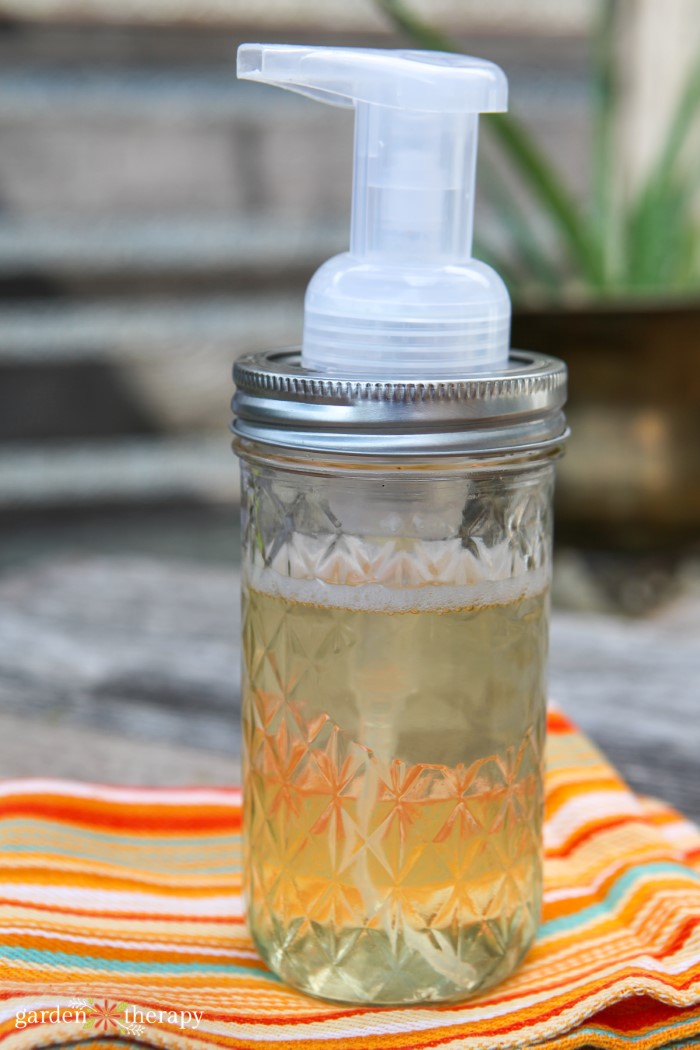
How to make a foaming soap dispenser
I set out to develop a recipe for a homemade foaming hand soap and came up with a fun, foamy soap that I am proud to wash my hands with.
Of course, I needed a nice container and a pump that I could refill, so I made one from a mason jar and a foam soap pump from a disposable bottle.
Today I showed you how to make such a dispenser so that you create less waste when buying disposable foam soap dispensers by replacing them with a reusable DIY version.
First I’ll show you how to make the soap foam dispenser in a mason jar, and then I’ll tell you my basic recipe for foaming hand soap.
There are a number of options for a permanent foam soap dispenser. You could certainly just buy one as there are some pretty good ones on Amazon like this one, this one and this one. You could also just refill the disposable foam soap bottle using my foam soap recipe below.
Or you can make one inexpensively by using a nice mason jar and the pump from a disposable glass jar.
That’s what I did. So can you.
materials
Do it!
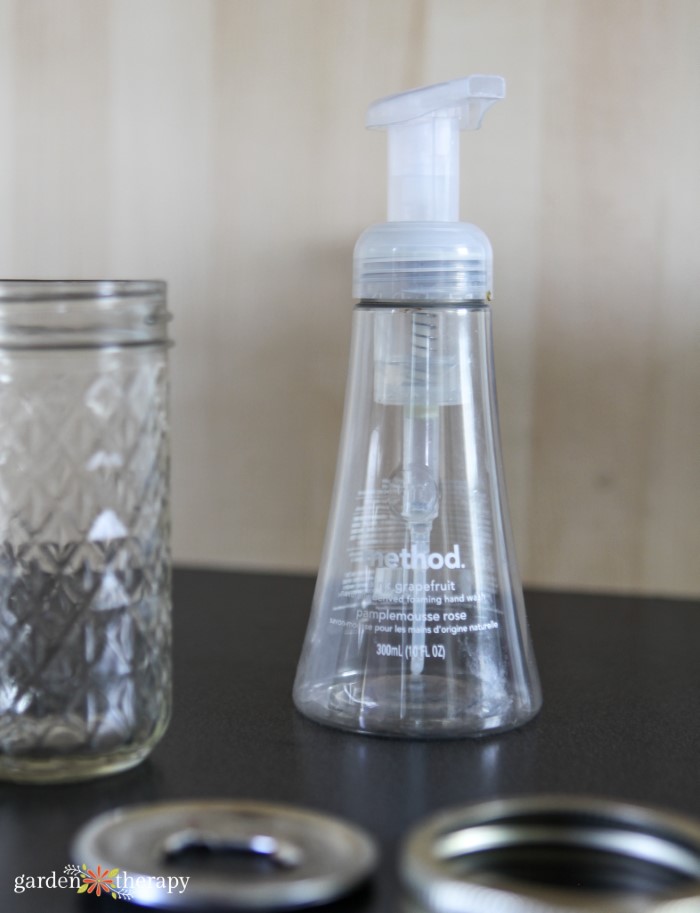
First, look for a disposable bottle of foaming hand soap. I chose one from Method because I liked the look of it. You only need the nozzle and the foam mechanism, so remove them from the bottle.
Next, cut a hole in the center of the snap-on lid for the soap pump to fit into. The easiest way to do this is to use a hammer and nail to make a few holes in the center of the snap-on lid. Then push the metal scissors in to cut out a hole.
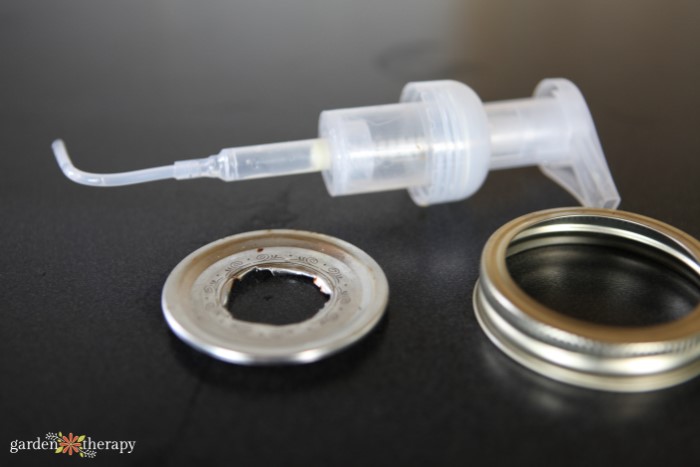
Cut the hole large enough to accommodate the thinner bottom part of the pump, but small enough that The pump head sits above it.
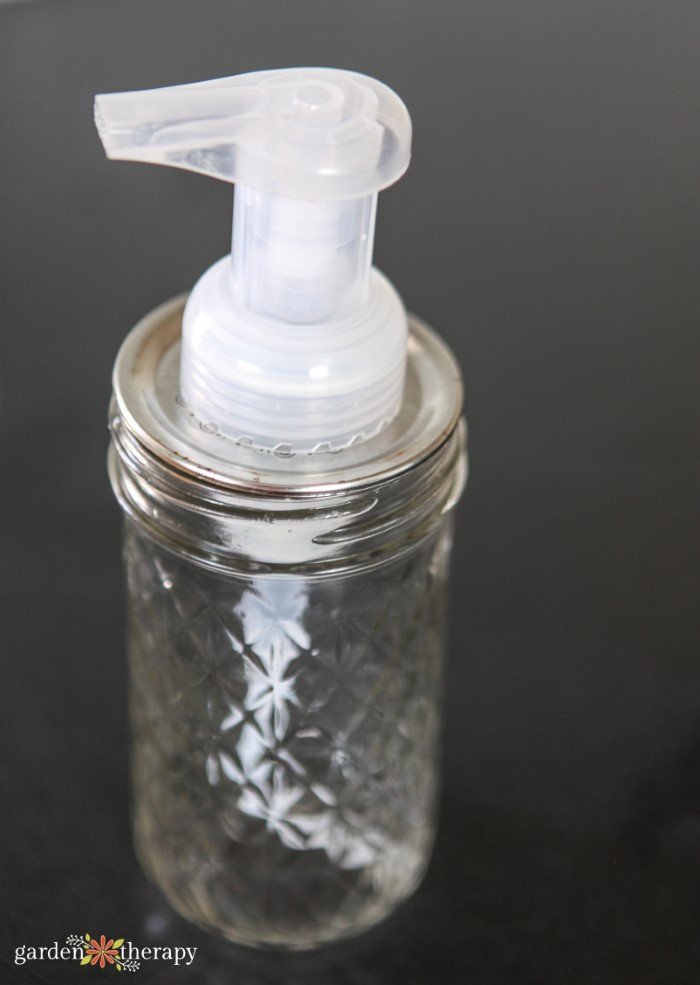
Insert the pump into the snap-on lid, close the jar and twist the ring to see how it fits. Trim the straw to fit if necessary.
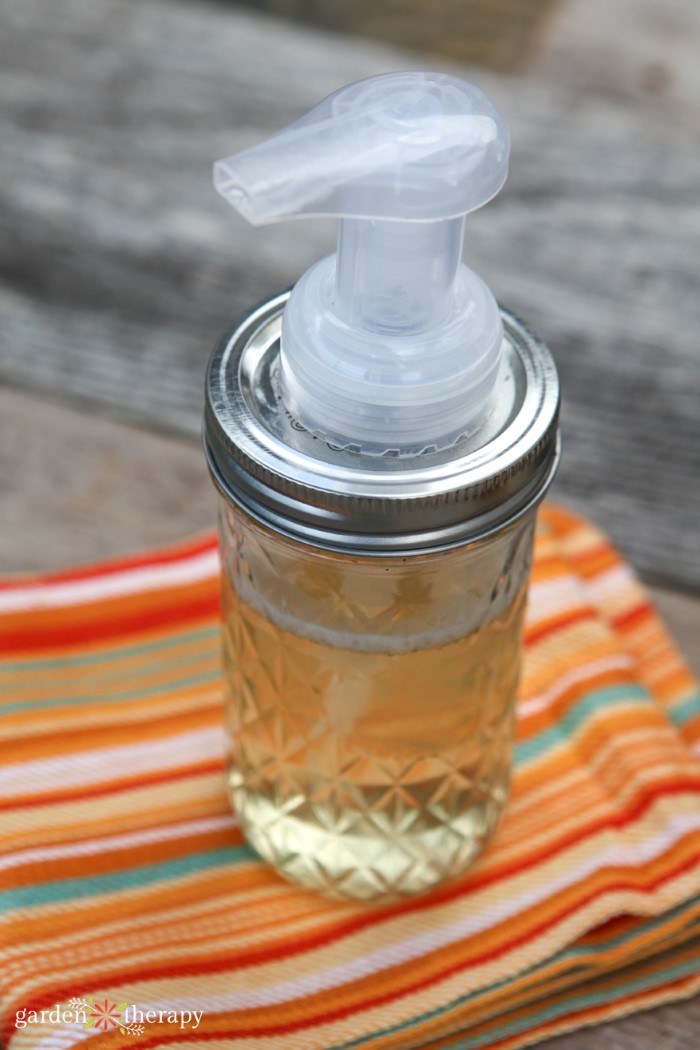
How to make foam soap
Make your own foaming hand soap with this recipe:
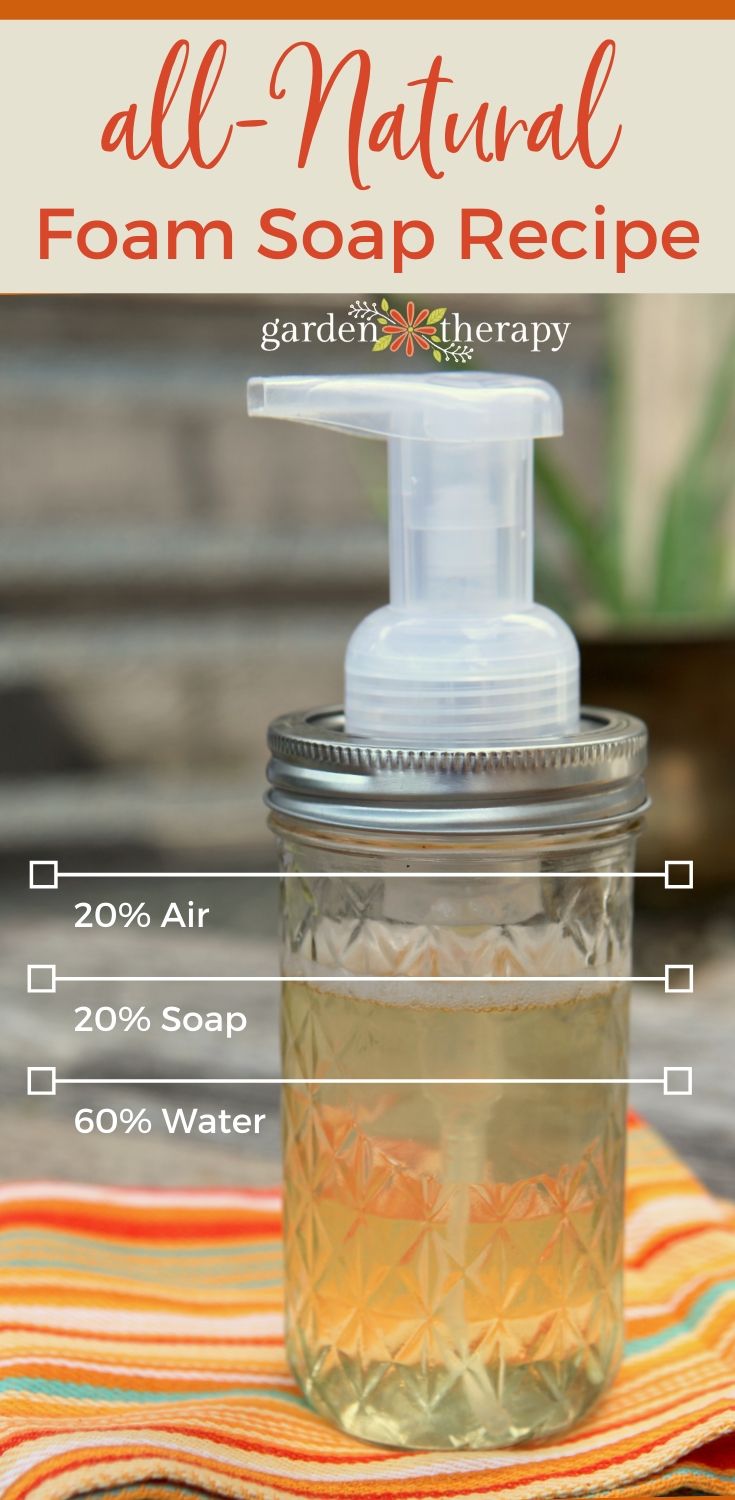
- 60% water
- 20% finished liquid soap*
- 20% air
*I use this liquid castile soap which is concentrated and needs to be diluted. I prepare the castile soap according to the instructions on the packet and use this for my 20%. If you like it a little creamier, use a little less water. You can replace 5% of the water with more soap.
If you use unscented castile soap, add 5-6 drops of essential oil to the recipe for an individual fragrance. I like these fragrances in my homemade foaming hand soap:
I’ve also made this recipe with herbal tea. Because it contains herbal ingredients, it doesn’t last as long. Make it in small batches and it’s a wonderful way to vary and spice up your foaming soap.
You can also check out my recipe for foaming hand soap with lime and rosemary.
Frequently asked questions about foaming hand soap
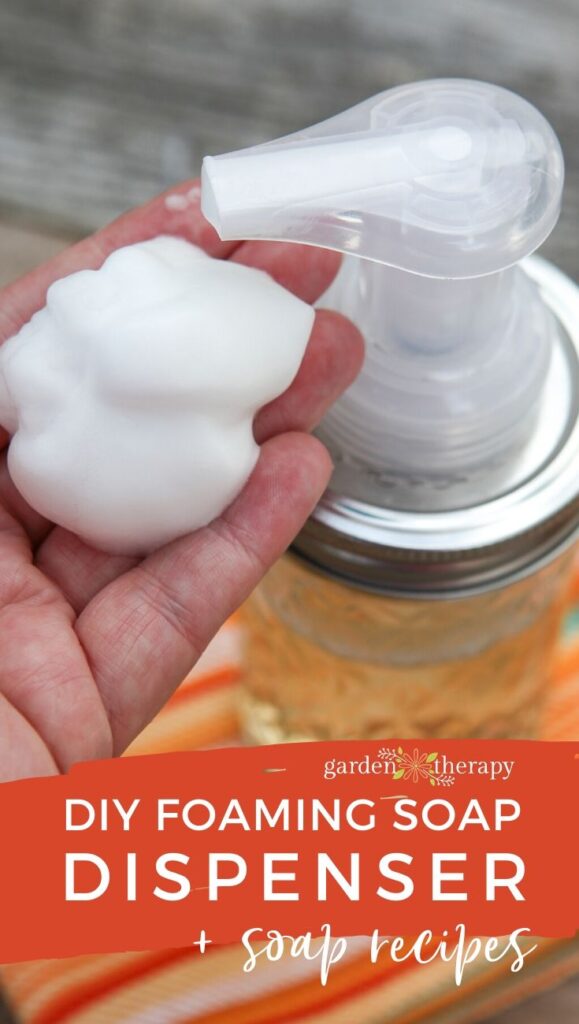
The pump consists of two parts, one for soap and one for air. It injects air into the soap as it passes through the pump, causing it to lather.
I wrote at the beginning that making your own foam soap is both less expensive and less wasteful than buying pre-made foam hand soap. It’s very easy to make as you simply dilute liquid soap and water in the right proportions. You can also reduce waste by refilling a container instead of buying a new one each time.
And finally, if you use natural castile soap (olive oil soap) as the basis of the recipe, it is very skin-friendly and completely natural.
No, regular soap is too thick for a foam dispenser. You need to reduce the viscosity by diluting it with water.
Yes, if used improperly. Dirt and germs are removed from the skin when soap is applied, so if the soaping has already been done, cleaning with foam soap may be less effective.
However, washing your hands properly is the key factor. If you apply any soap, lather for 20 seconds, rinse well, dry your hands and then apply hand cream, you will have clean, soft and nourished hands, no matter which type of soap you choose.
Although I add water, I don’t add any preservatives. When I make my soap, I make a small batch that lasts about a month, but I’ve had it last over six months.
It is important that when preparing the food, you make sure that the container and all utensils used have been sterilized so that no further bacteria can enter the container after it is closed.
They do. When I refill the soap, I just wash the rust off with a nail brush. I have to sterilize the container before the next batch anyway to prevent bacteria, so it’s not a big deal.
If the rust bothers you, you can also seal it with spray paint.
More soap recipes to try
If you are also interested in bar soap, check out these recipes:
Foaming hand soap
How to make a natural foaming hand soap with castile soap (olive oil)
- 60 % Water
- 20 % finished castile soap
- 20 % Air
- 5-6 drops volatile oil
Prepare a clean glass with a foam soap pump. Measure the percentage of space in the glass to determine the amount.
Fill the glass 60% with water.
Prepare castile soap according to the instructions on the package – it is undiluted, so you will fill the jar 20% full with this ready-made soap mixture. If you like it a little creamier, replace 5% of the water with more soap.
Leave the top 20% for air.
Add essential oils of your choice.
Add the soap pump and shake to mix everything.
Shake regularly before use to ensure the essential oils are distributed.
DIY,Jar,Month of July Week 3,natural beauty,natural cleaning,Natural skin care range,Soap